Wetland restoration
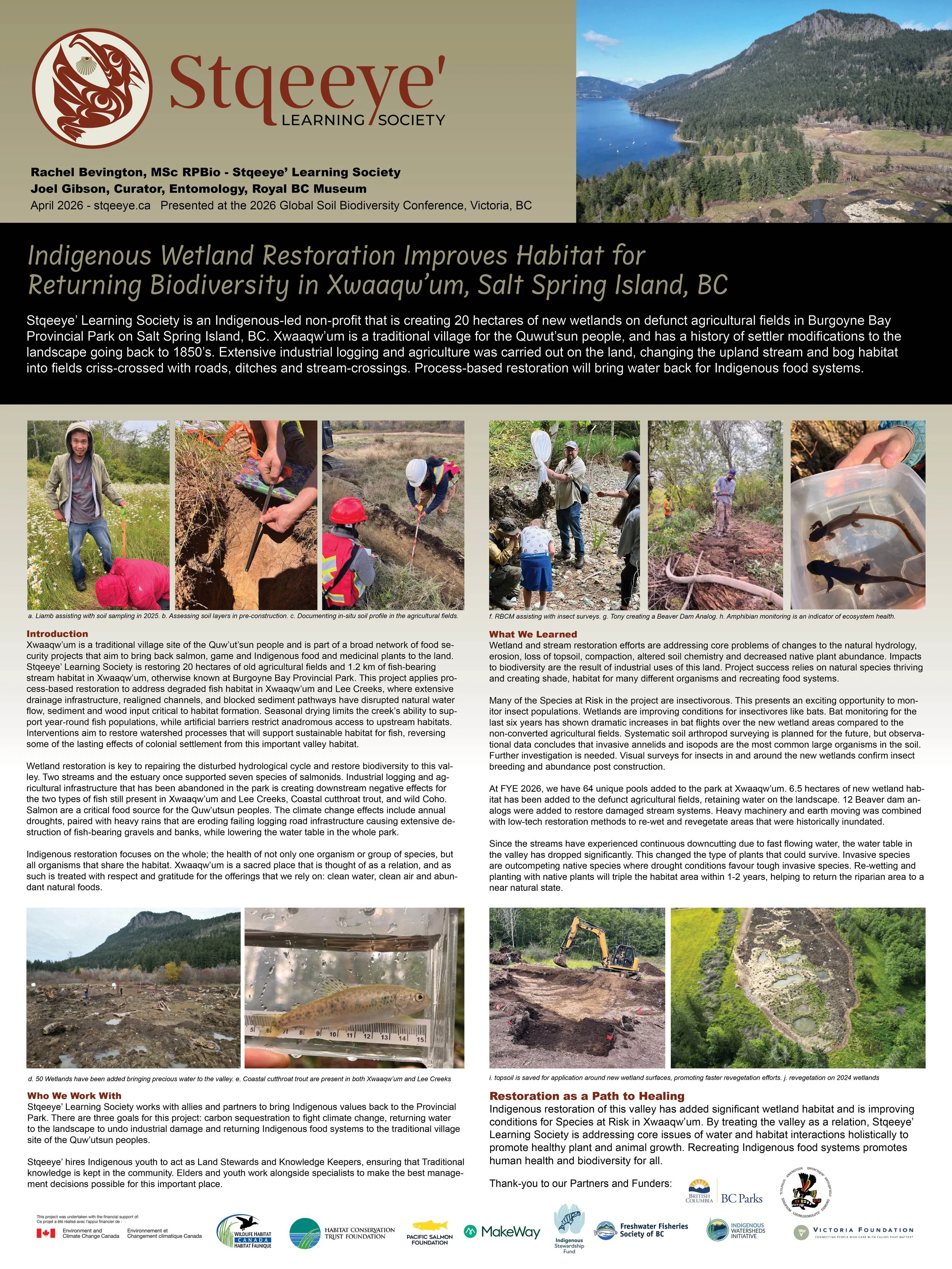
Our wetland restoration project is working to restore 20 hectares of wetlands in Xwaaqw’um. We are doing this to bring Indigenous food systems and biodiversity back to the land that has supported Quw’utsun peoples for generations.
When we restore wetlands we are bringing back native species, helping build climate resiliency, store clean water and store carbon in the wetlands and forests.
Wetland Restoration in Progress!
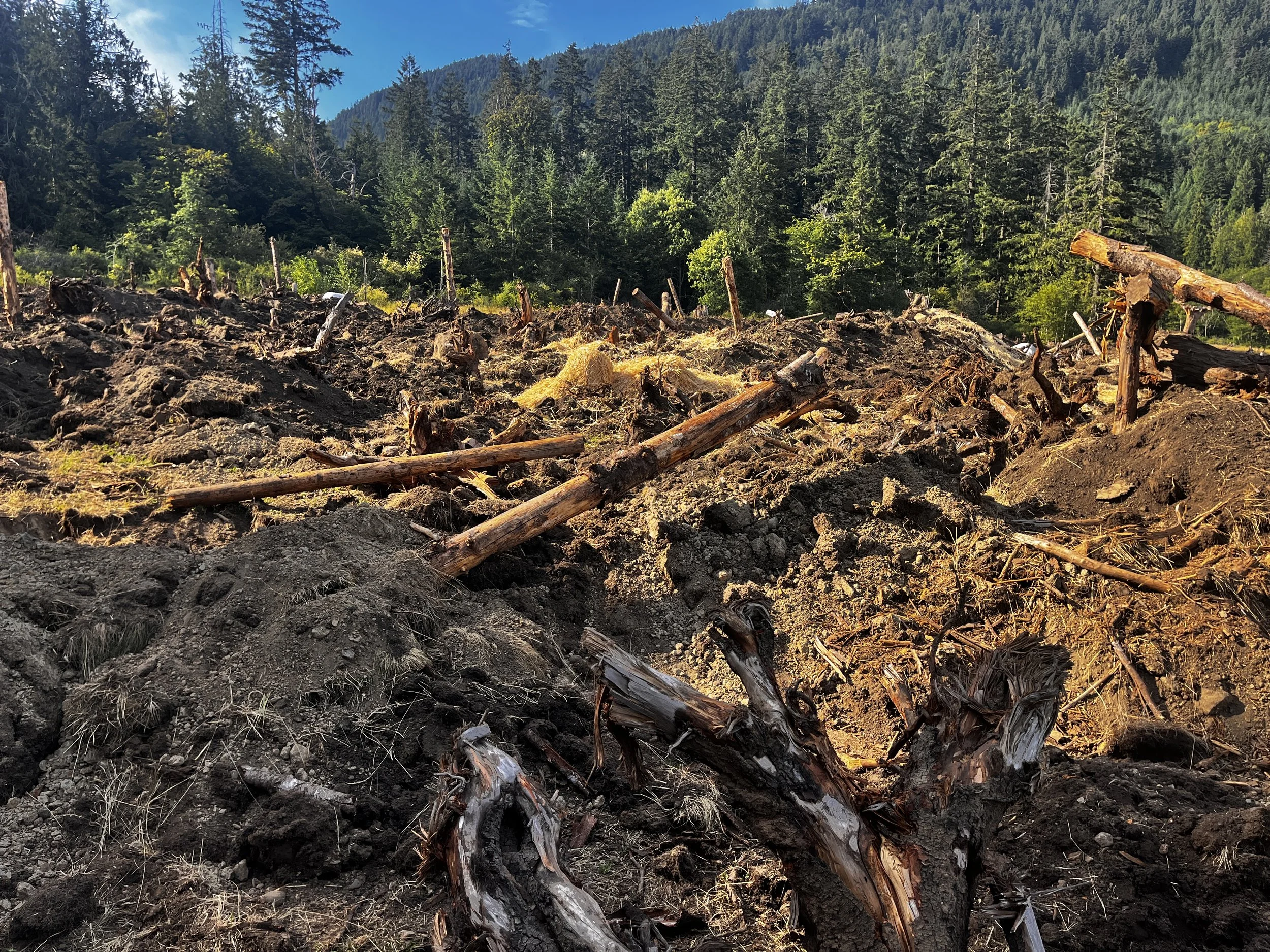
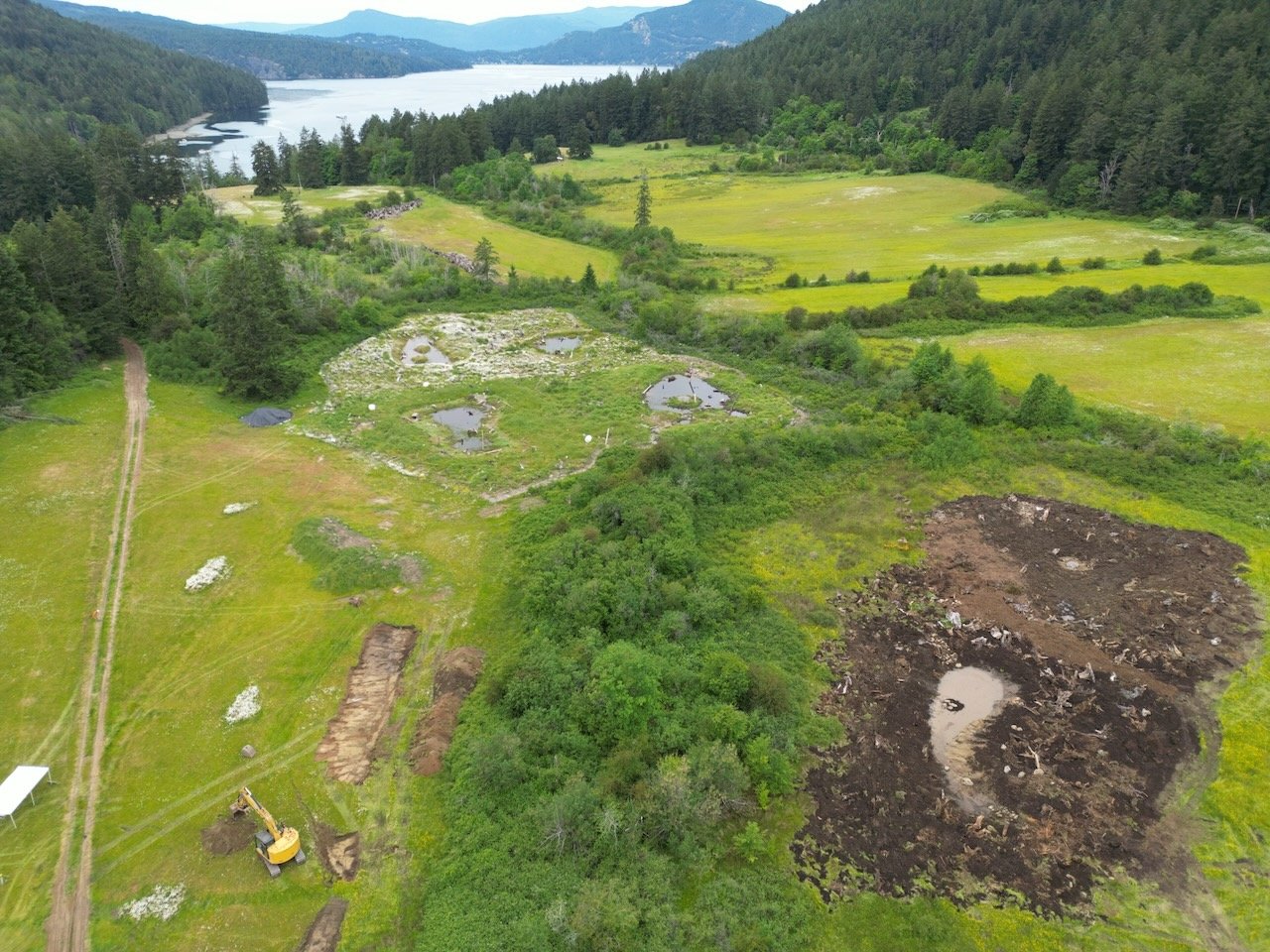
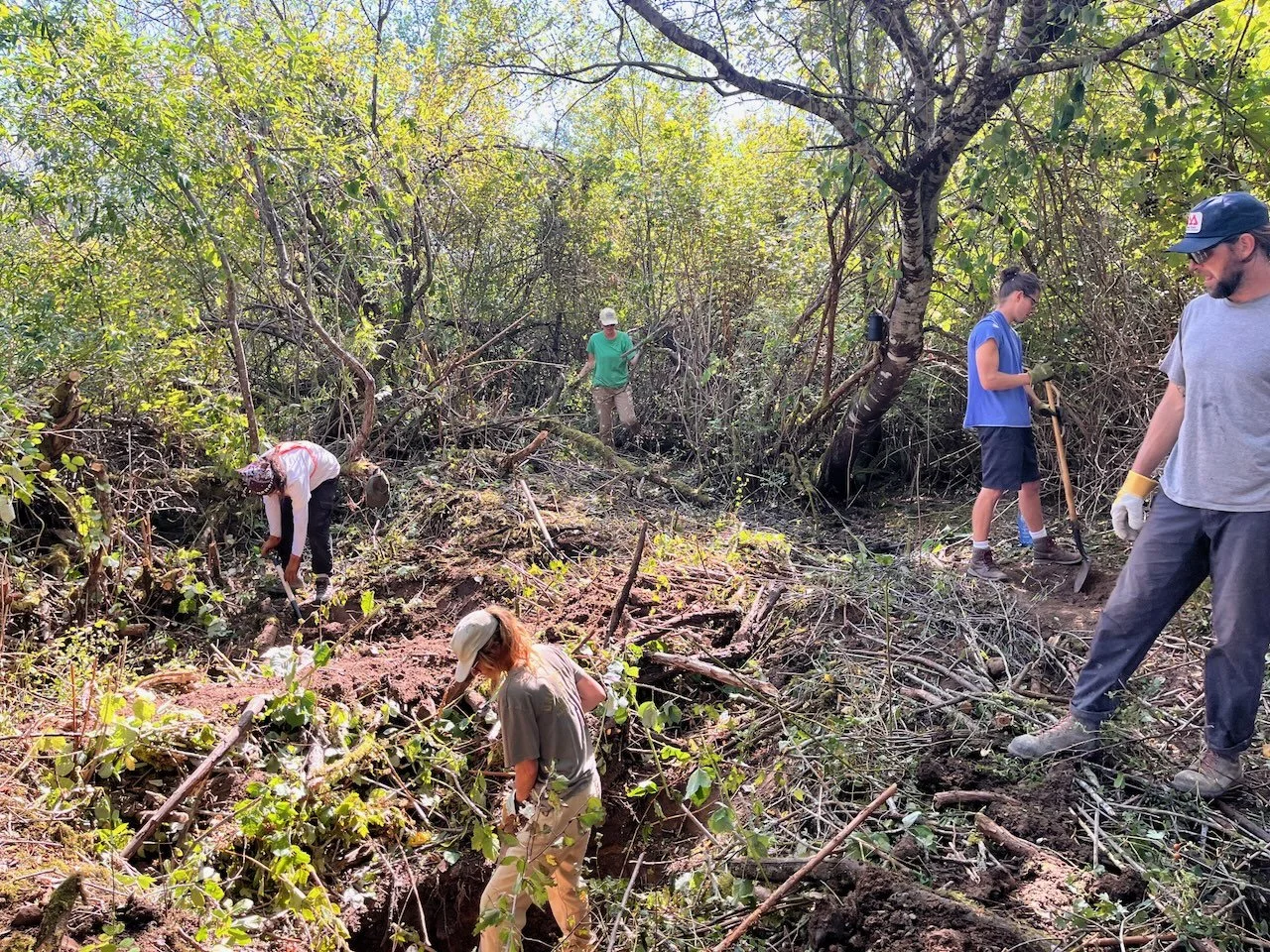
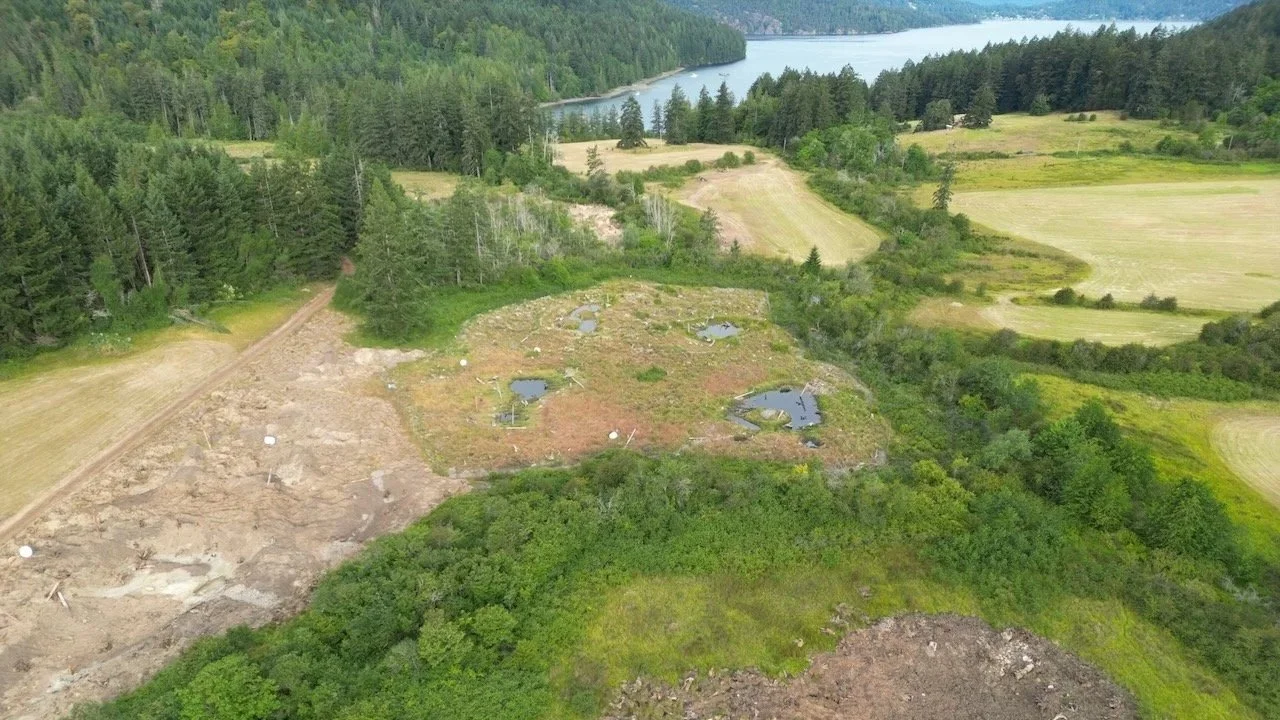
Stqeeye’ Learning Society’s third year of Wetland Restoration at Xwaaqw’um is underway! The Stqeeye’ team and Diggin It Excavation are building new wetlands and creating “rough and loose” ground for planting of native plants and trees in the fall and winter. Construction is expected to happen at the end of September 2026 to reach the goal of creating 8 new wetland pools. To date 75 wetlands have been created, welcoming an abundance of new native plants and wildlife, including frogs, salamanders, ducks, nesting birds and park visitors!
Park visitors are welcome to walk the park as normal, with dogs leashed.
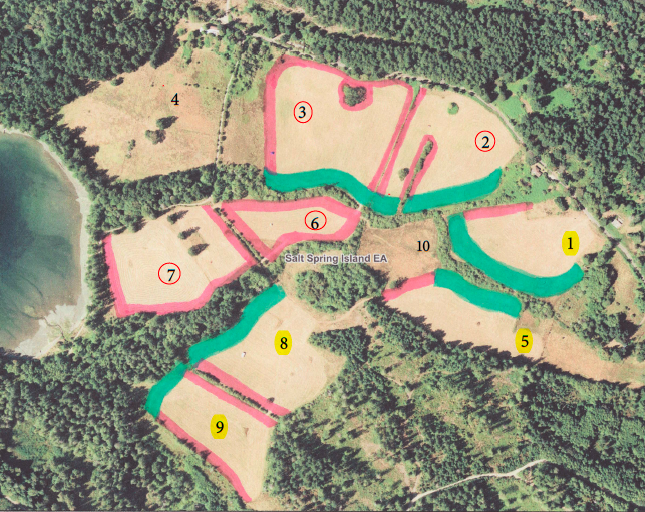
Between September 21-October 9, visitors can expect infrequent trucking between the quarry (across from the big barn) and field 6, 8 and 9 (see map). The trucks will use the road access beside the big barn and the path through the field at the entrance of the park.
For inquiries contact Leanna Boyer 250-221-8095; admin@stqeeye.ca
We are very grateful for the outpouring of support from Salt Spring Islanders and appreciate how folks are keeping a safe distance from the machine work.
Stay tuned for upcoming volunteer opportunities to assist with transplanting thousands of native plants!
The importance of wetlands
Wetlands are the lungs of the earth. It is estimated that we have lost over 35% of global wetlands from 1970-2015. Before contact, Xwaaqw’um would have been home to towering old growth Western Red Cedar trees, intact fish-bearing streams and abundant wildlife. Stqeeye’ Learning Society is undertaking an important restoration project that will help to re-establish critical ecosystem function that has been lost due to industrial colonization practices, such as logging and agriculture, over the last 200 years.
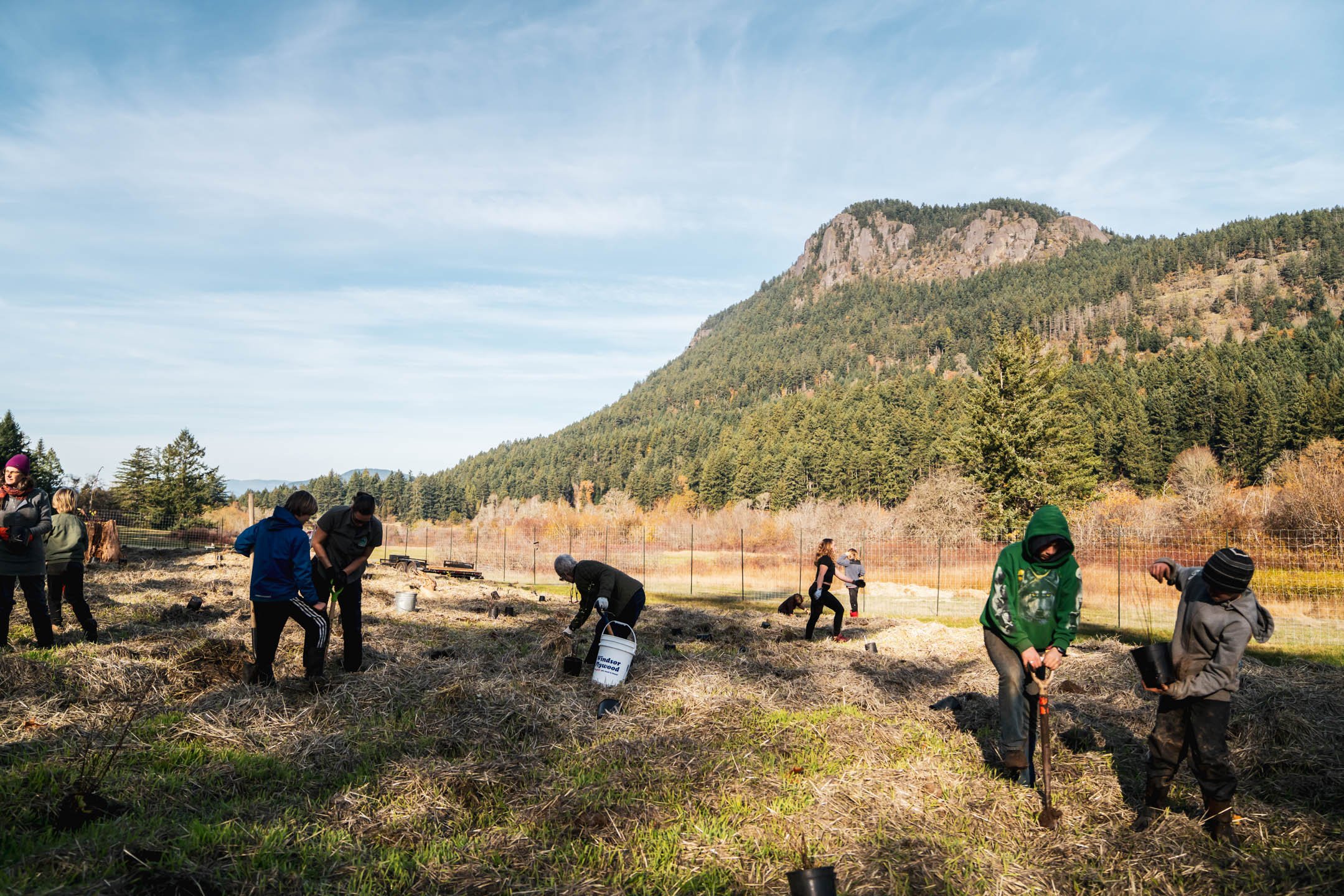
Wetland restoration at Xwaaqw’um
Our first wetland restoration was completed in the fall of 2019 with Quw’utsun workers, local school groups and other local contributors including BC parks and the BC Wildlife Federation. These wetlands were created with Rewilding Water & Earth Inc. and Ken Tara Excavating. Volunteers collected and spread native plants seeds at the restoration site.
Our second set of three wetlands and stream restoration began in 2020 and native plants were planted in fall 2021 with community volunteers and our Land Guardian Team. This project was completed with the funding support of Healthy Watersheds Initiative, BC License Plate Fund and generous donations from our supporters.
In the 2024-2025 seasons, Origins Environmental Inc., Diggin’ It Excavating and Redd Fish Restoration Society helped us add 60 wetlands and 17 Beaver Dam Analogs to the park. As of 2026, Stqeeye’ Learning Society has added 75 total wetlands to Xwaaqw’um. These wetlands and in-stream Beaver Dam Analogs will help to sequester water on the landscape, creating climate resiliency in the face of extended droughts and seasonal flooding.
Our restoration work is guided by Indigenous elders and Western science, in partnership with Cowichan Tribes and BC Parks. Stqeeye’ has been supported and uplifted by many generous foundations in growing our wetland project since 2018.


Funding partners
2026-27 funding partners include Environment and Climate Change Canada through Indigenous Partnerships for Species at Risk and Nature Smart Carbon Sequestration, Indigenous Stewardship Fund Salmon Resiliency, BC Parks, Wildlife Habitat Canada, Makeway Foundation and Pacific Salmon Foundation.
We wish to acknowledge our donors and supporters who buy hunting licenses, license plates and fishing licenses that create these funds and opportunities to complete important restoration work.
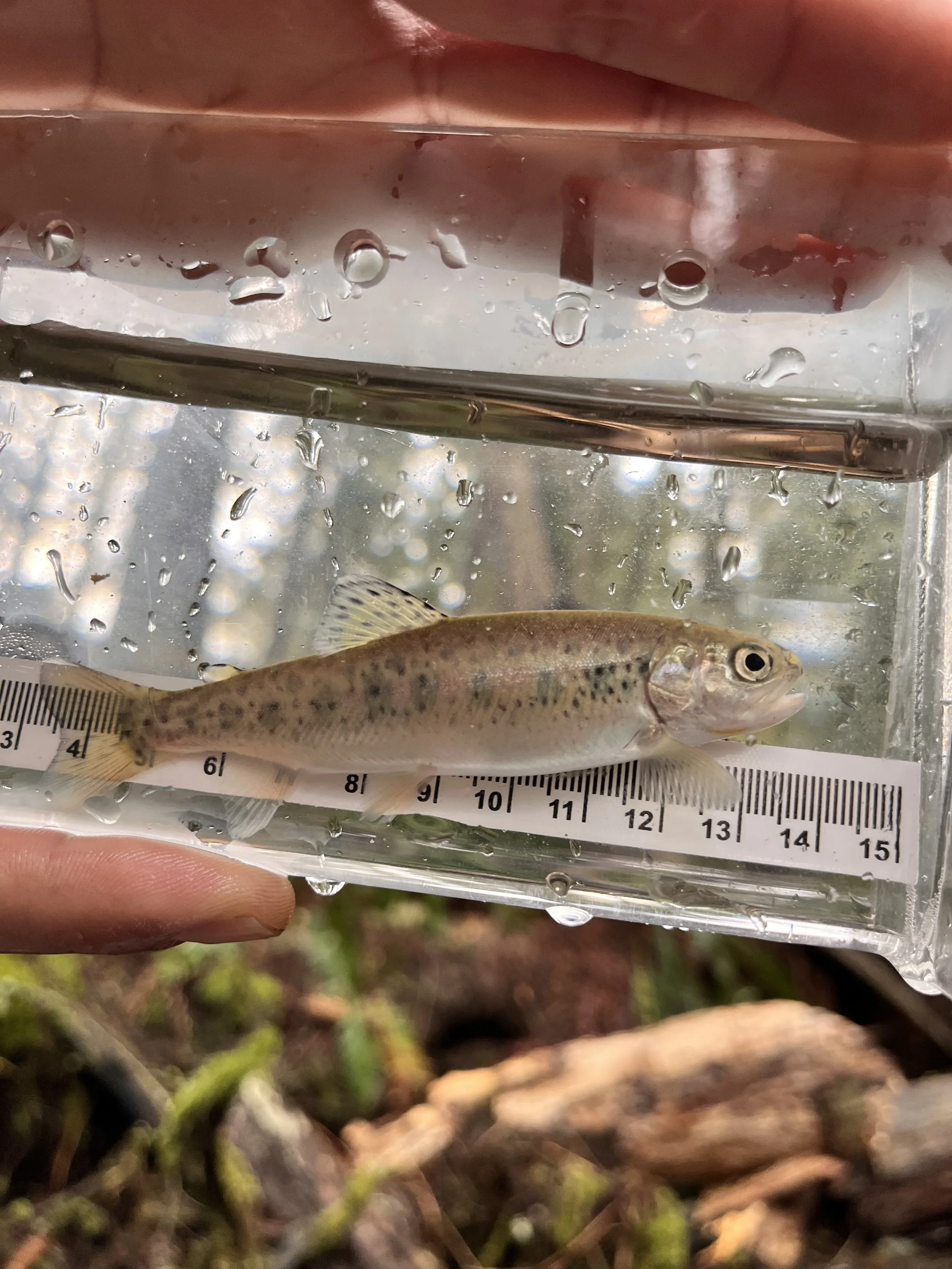
Working for Fish
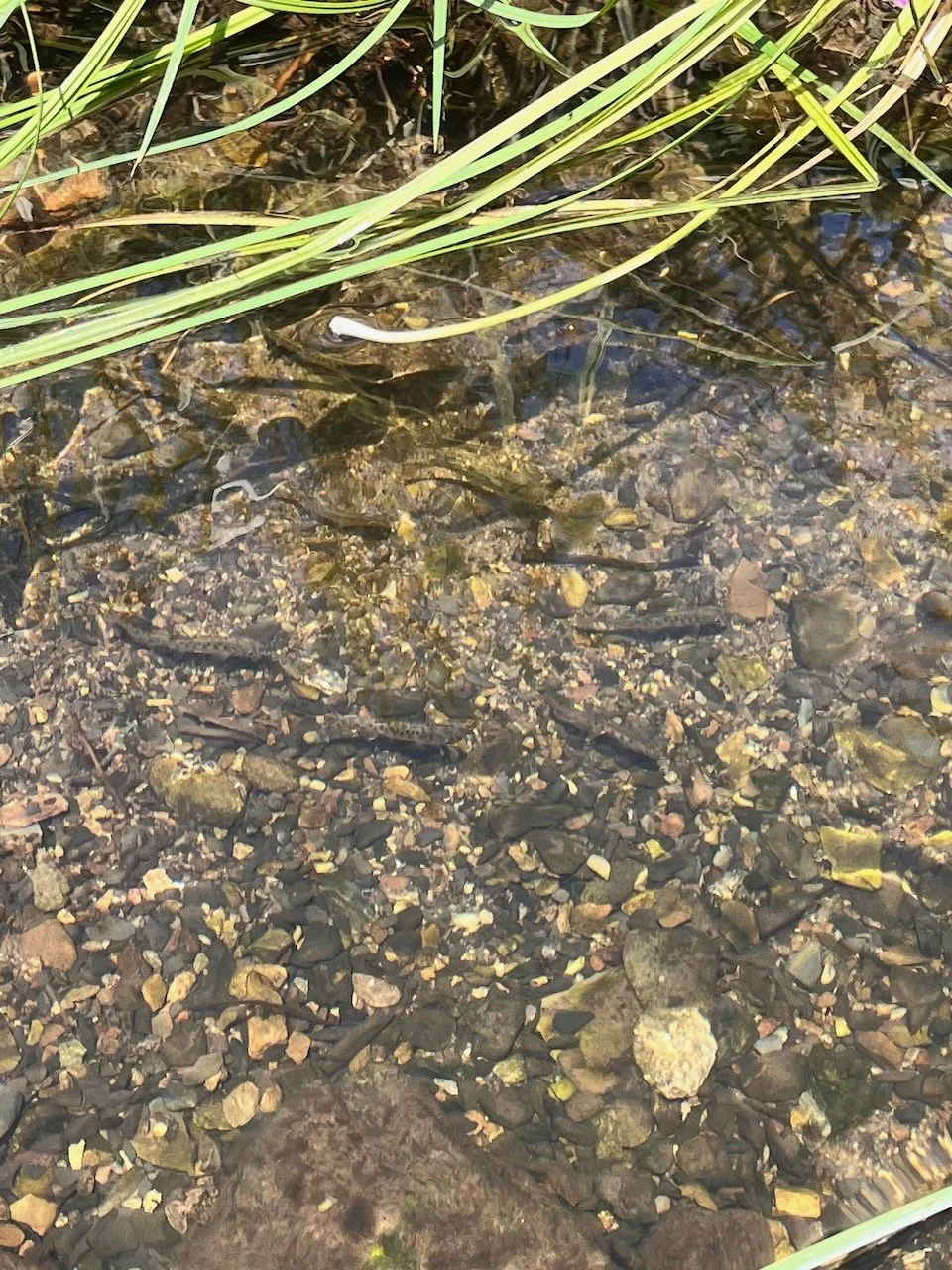
Lee and Xwaaqw’um Creeks are both fish-bearing and important cool water habitat for Coho and Coastal Cutthroat trout spawning and rearing. These fish are key to the health of the forest and estuary habitat. Many species of wildlife depend on fish for life, and the nutrient cycling that salmon bring to streams and forests is undeniably critical for biodiversity.
By working on stream restoration, adding Beaver dam analogs, monitoring water quality and removing obstructions and fences from the streams, Stqeeye’ Learning Society is making fish a priority in our work in the park. The 75 new wetlands are designed to add more year-round water to the landscape for these two streams.