
Berms and Swales at Xwaaqw’um
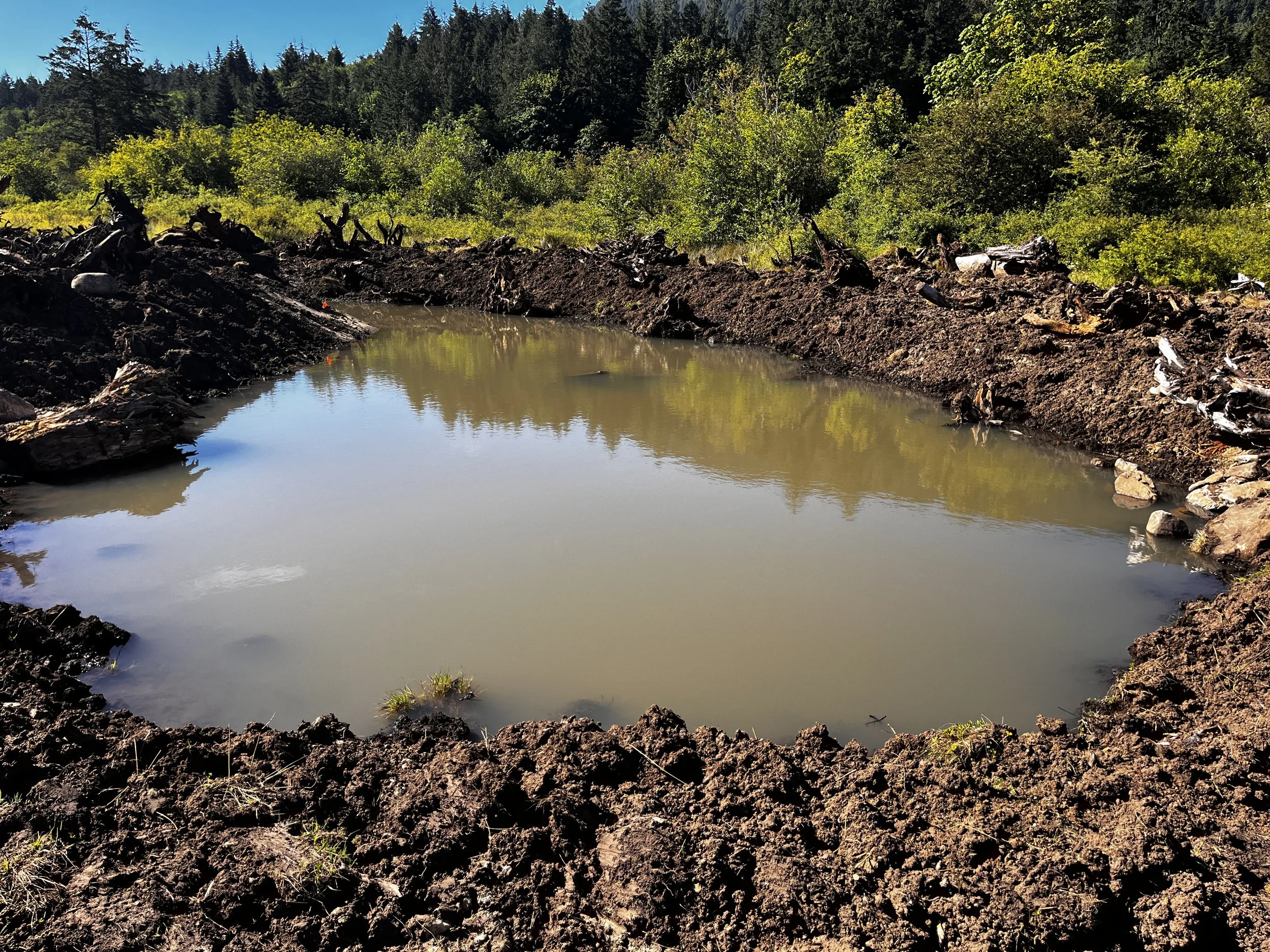
Water collecting in June 2026 wetlands in the Lee Creek watershed.
June wetland construction was completed with an additional 12 wetlands built in the fields of Xwaaqwu’um. Part of the June work was to remediate some of the very dry areas in some upland habitat. Using berms and swales, the restoration team have added dynamic habitat to the dry field areas above some of the wetlands.
Berms are a way to add vertical habitat to a space where greater dimension is required. They lend themselves to contoured land that is not suitable for wetland depressions. They function to capture water on their uphill side, and can be added on very steep land, such as in terraced gardens or mountainsides. In Xwaaqw’um, there were two very dry, sandy areas that would not make good wetland habitat. There were almost no plants growing in these areas, and no water storage capability in the well-draining soils.
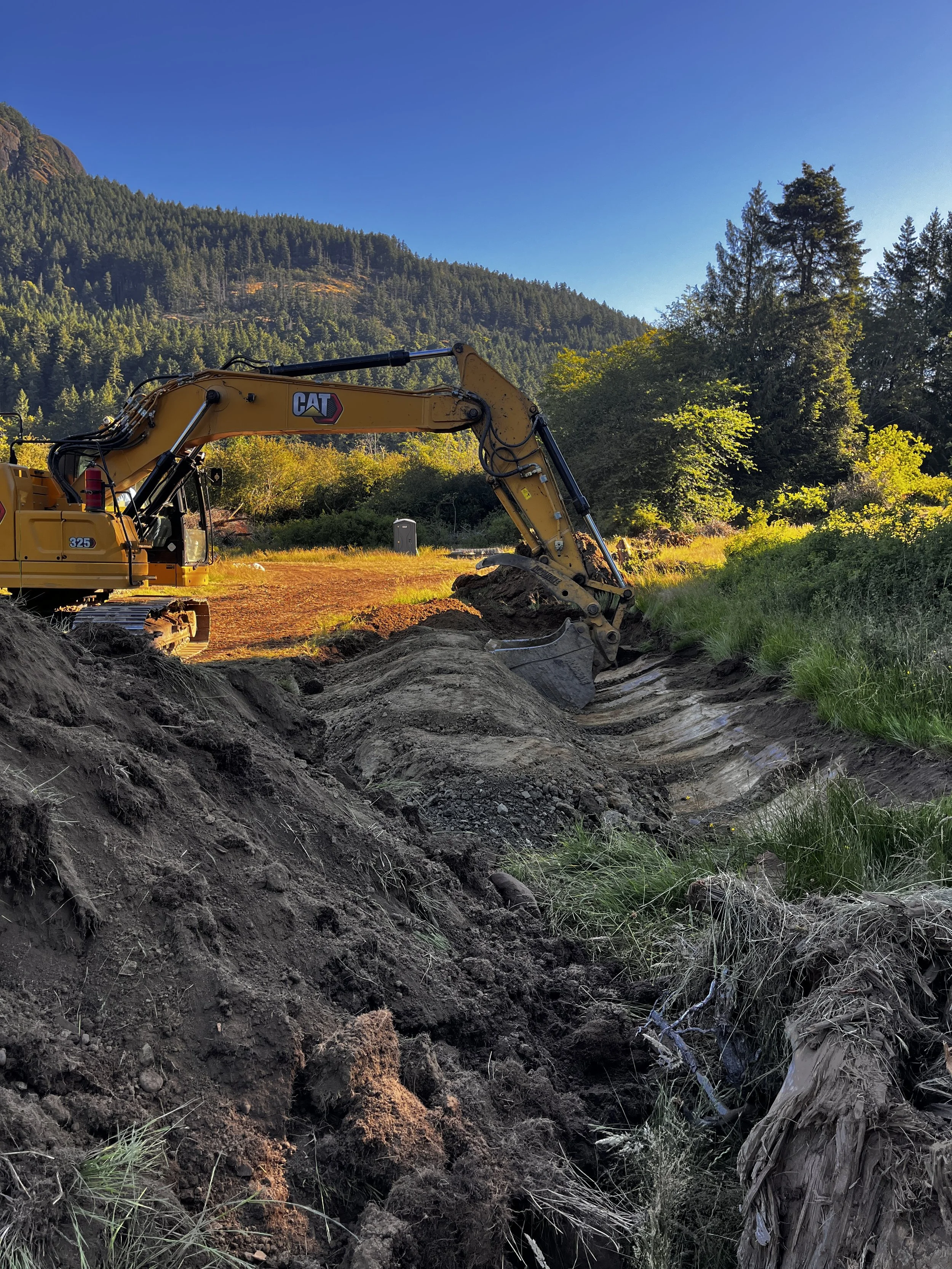
Restoration team adding a berm to the up-hill side of a wetland.
Berms were created using coarse woody debris and stumps, mixing them into the soils to add a sponge-like effect. As water saturates the woody debris, it will be held for a longer period of time in the berms. This lowers the effects of erosion on the field, preventing runoff of topsoil and nutrients. The woody debris creates rich habitat for mammals and reptiles, providing cover, moist shady refugia and eventually food, as the soils begin to retain more water and be able to support more plants.
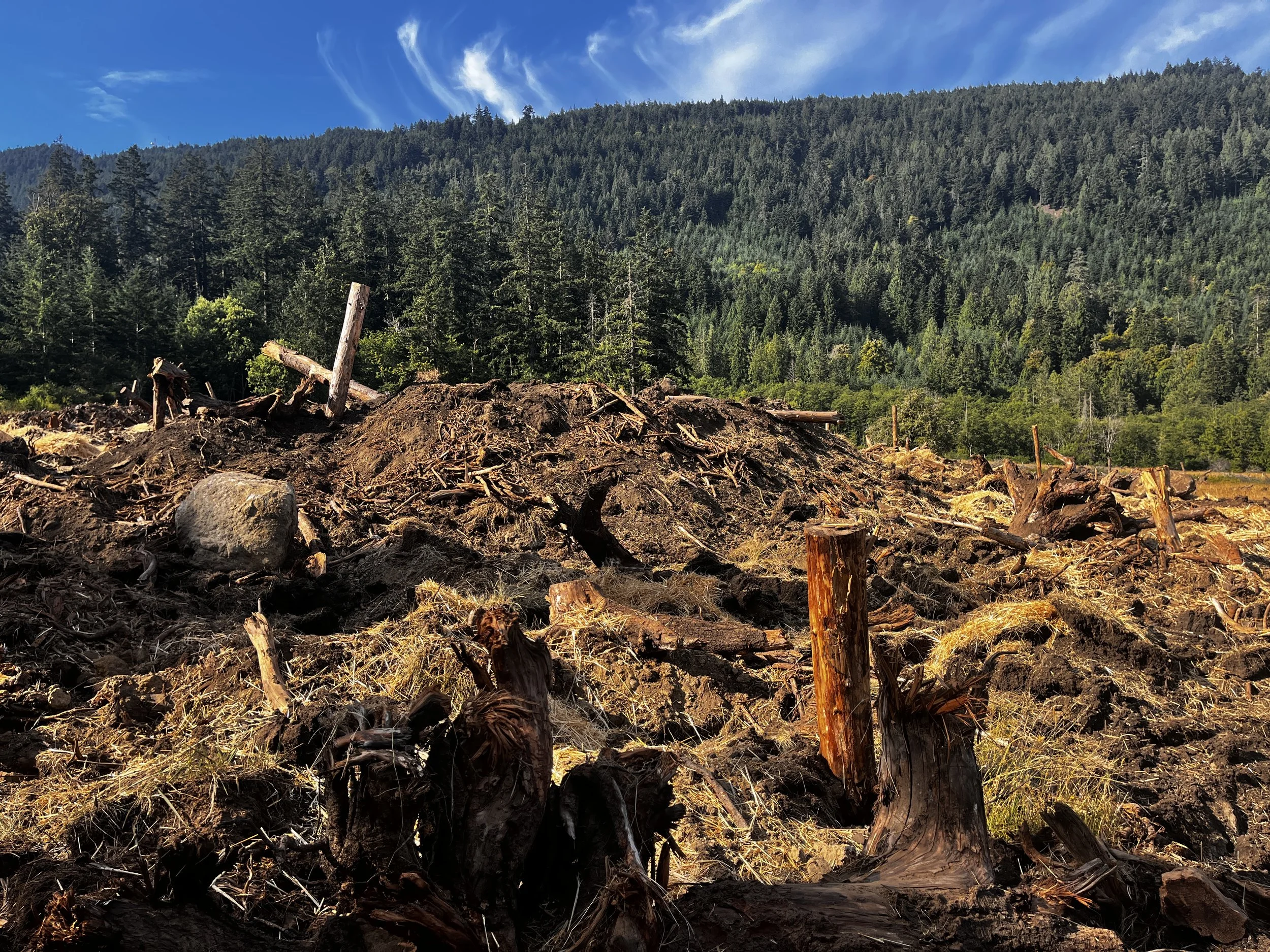
Berms and swales trap water as it runs downhill in upper Field 8
Using swales and berms is a restoration method that is practiced in very dry landscapes. Smiles or half-moons are created in very dry land in places like Kenya, to bring green back to dry-cracked land. See Earth Smiles: Regreening Samburu
The berms and swales created at Xwaaqw’um have a very high chance of success, as the moisture regime here is much better than in Africa. By capturing water on the uphill side of the smile, plants will have a greater chance of establishing here. Water that would normally sheet across the surface of the field in the winter will be directed to sink into the centre of the half-moon, soaking into the stumps and wood under the soil and staying in the spongy wood as it decomposes here.
Restoration work like this is necessary in the disused agricultural fields because they are missing some of the key elements needed to regenerate habitat on their own. Annual mowing was keeping invasive species down, but was also removing any native plants that were able to establish themselves. Wild roses, Black Hawthorn and Black Cottonwood seedlings are able to grow in these very dry areas, and will be able to get established in the berms. Our native plant seed mix from Satinflower Nurseries will include some grasses and flowers that are adapted for dry habitats, bringing much needed biodiversity back to the park.
